

Best overall for exploring graphotherapy: Your Handwriting Can Change Your Life by Vimala Rodgers. Best for clearer everyday writing: Write Now by Barbara Getty and Inga Dubay. Best for troubleshooting handwriting: Improve Your Handwriting by Rosemary Sassoon and G. S. E. Briem. These graphotherapy books and practical alternatives serve different goals; this 2026 guide separates handwriting practice from claims about personality change.
- Vimala Rodgers’s Your Handwriting Can Change Your Life is the closest fit for readers specifically seeking graphotherapy books.
- Getty and Dubay’s Write Now suits handwriting improvement through an italic writing approach.
- Sassoon and Briem’s Improve Your Handwriting suits readers examining their existing writing habits.
- Changing handwriting is not an established treatment for anxiety, depression or other mental health conditions.
Why this matters
Want your writing to feel clearer, calmer or easier to read? Start by deciding which outcome you actually want. Graphotherapy connects deliberate handwriting changes with proposed changes in personal qualities; handwriting instruction focuses on how you form letters and write.
Those are different promises. Evidence that practice improves a writing skill does not establish that changing a letter changes your personality. Choose a book for the exercises you can assess, not for a promised transformation you cannot verify.
Soulera offers online handwriting and signature analysis with self-discovery reports for individuals and corporate clients. Soulera readers choosing graphotherapy books should treat reflective interpretations separately from observable handwriting improvement.
For your 2026 reading list, the useful distinction is not traditional versus modern. It is reflection versus instruction: are you exploring ideas about yourself, or learning a more readable way to write?
What makes the best graphotherapy books
Use these criteria before choosing a title:
- Goal fit: The book should address your actual aim: graphotherapy, legibility or understanding your writing habits. A related book is not automatically a substitute.
- Practice guidance: Look for instructions you can follow on paper rather than personality descriptions alone. You need an action, not just an interpretation.
- Readable examples: Letterforms and writing examples should be clear enough to study. Inspect a sample rather than choosing from the cover description.
- Room for your handwriting: A useful approach should help you examine your existing writing, even if it also introduces a different style.
- Claim boundaries: Separate advice about letter formation from assertions about confidence, relationships or emotional health. They require different evidence.
- Repeatable review: Choose a book that supports comparing your work over time. Readability is easier to assess than a broad feeling of personal change.
These criteria favour a good match over a universal winner. A book can be the right introduction to graphotherapy and still be the wrong choice for improving rushed meeting notes.
Graphotherapy books at a glance
| Rank and book | Best for | Standout approach | Key limitation |
|---|---|---|---|
| 1. Your Handwriting Can Change Your Life — Vimala Rodgers | Exploring graphotherapy and reflective practice | Connects deliberate handwriting changes with personal-development ideas | Its personality-change premise should not be treated as established psychological evidence |
| 2. Write Now — Barbara Getty and Inga Dubay | Learning clearer everyday handwriting | Teaches handwriting through an italic approach | It teaches a writing style, not graphotherapy or personality assessment |
| 3. Improve Your Handwriting — Rosemary Sassoon and G. S. E. Briem | Examining and improving existing handwriting habits | Addresses practical handwriting improvement | It is not a guide to interpreting personality or changing emotional traits |
The order reflects relevance to the search for graphotherapy books. It does not mean the first book is the strongest choice for every handwriting problem.
1. Your Handwriting Can Change Your Life: best for graphotherapy exploration
Vimala Rodgers’s Your Handwriting Can Change Your Life is the closest match when you specifically want a book connecting handwriting change with personal development. Its central approach gives letterforms a role in a broader self-improvement practice.
Read it as an introduction to that framework, not as proof that handwriting determines your character. You can explore its ideas while keeping a separate record of what you actually notice in your writing and daily behaviour.
Your Handwriting Can Change Your Life pros
- Directly addresses the connection between handwriting change and personal-development ideas.
- Gives readers a named framework to explore rather than an unrelated penmanship topic.
- Fits a reflective practice in which writing prompts questions about habits and intentions.
Your Handwriting Can Change Your Life cons
- The proposed link between letter changes and personality changes is not an established therapeutic mechanism.
- Its premise is a poor match if you only want help making handwritten notes readable.
- Personal interpretations can distract from measurable writing goals if you treat them as facts.
Best for: Readers curious about graphotherapy who can distinguish an author's framework from validated psychological assessment.
For your 2026 practice, write down why you are trying an exercise before starting it. If your aim is clearer letters, judge the letters; if your aim is reflection, judge whether the exercise helped you articulate something useful.
Verdict: Buy for graphotherapy exploration; skip if you expect a proven personality-changing treatment.
2. Write Now: best for clearer everyday handwriting
Barbara Getty and Inga Dubay’s Write Now teaches handwriting through an italic approach. Its focus is the writing itself, making it a practical alternative when your real concern is inconsistent or difficult-to-read handwriting.
This is not a graphotherapy book in the personality-change sense. That distinction is its strength for readers who want to work on letterforms without interpreting them as evidence of character.
Write Now pros
- Centres handwriting instruction rather than personality interpretation.
- Offers an identifiable italic style you can study and practise.
- Gives you a concrete outcome to assess: whether your writing becomes easier to read.
Write Now cons
- Learning an italic approach requires willingness to adjust familiar letterforms.
- It does not answer questions about graphology-based personality interpretation.
- Readers who want to preserve every feature of their current handwriting may prefer a less style-specific approach.
Best for: Readers willing to learn an italic writing approach to improve everyday legibility.
Before choosing it, look at sample letterforms and ask whether you want to write that way. A style can be clear and well taught without matching your preferences. Do not choose it simply because it appears alongside graphotherapy titles.
In 2026, the best reason to choose Write Now remains straightforward: you want handwriting instruction rather than a personal-development interpretation. Use ordinary words and sentences alongside any letter practice so you can assess whether the learning transfers to your notes.
Verdict: Buy for an italic handwriting approach; skip if personality interpretation is your main goal.
3. Improve Your Handwriting: best for troubleshooting existing habits
Rosemary Sassoon and G. S. E. Briem’s Improve Your Handwriting focuses on practical handwriting improvement. Choose it when you want to examine how you currently write rather than begin with a graphotherapy interpretation.
Your question becomes specific: what makes a word hard to read, and what adjustment helps? That is a more useful starting point than trying to infer your entire personality from the same word.
Improve Your Handwriting pros
- Keeps attention on the practical task of handwriting improvement.
- Fits readers who want to examine their current writing before choosing changes.
- Supports a goal that you can check through comparable writing samples.
Improve Your Handwriting cons
- It does not provide a graphotherapy framework for personal transformation.
- Reading alone cannot replace the writing practice needed to assess an adjustment.
- It is not a medical assessment of pain, tremor or a sudden change in handwriting.
Best for: Readers whose priority is understanding and improving an existing handwriting problem.
Begin with a real example: a note you struggled to reread, an unclear name or a word with crowded letters. Identify the difficulty before deciding what to practise. This keeps the exercise connected to your actual use of handwriting.
For a 2026 handwriting-improvement plan, this title fits the reader who values a practical question over a symbolic interpretation. Keep your review equally practical: can you reread the sentence comfortably, and does the adjustment work outside isolated practice?
Verdict: Buy for practical handwriting improvement; skip if you specifically want graphotherapy theory.
How the books are ranked
This ranking separates subject relevance from practical use. Your Handwriting Can Change Your Life comes first because it directly matches graphotherapy exploration; Write Now and Improve Your Handwriting serve distinct handwriting-improvement goals.
The criteria are goal fit, practice guidance, readable examples, room for your existing handwriting, claim boundaries and repeatable review. No clinical effectiveness ranking is implied.
Soulera’s graphotherapy books guide keeps handwriting analysis, writing instruction and mental health treatment separate. A meaningful reflection is not the same thing as a validated assessment, and a clearer page is not proof of a changed personality.
Turn a book into a useful practice routine
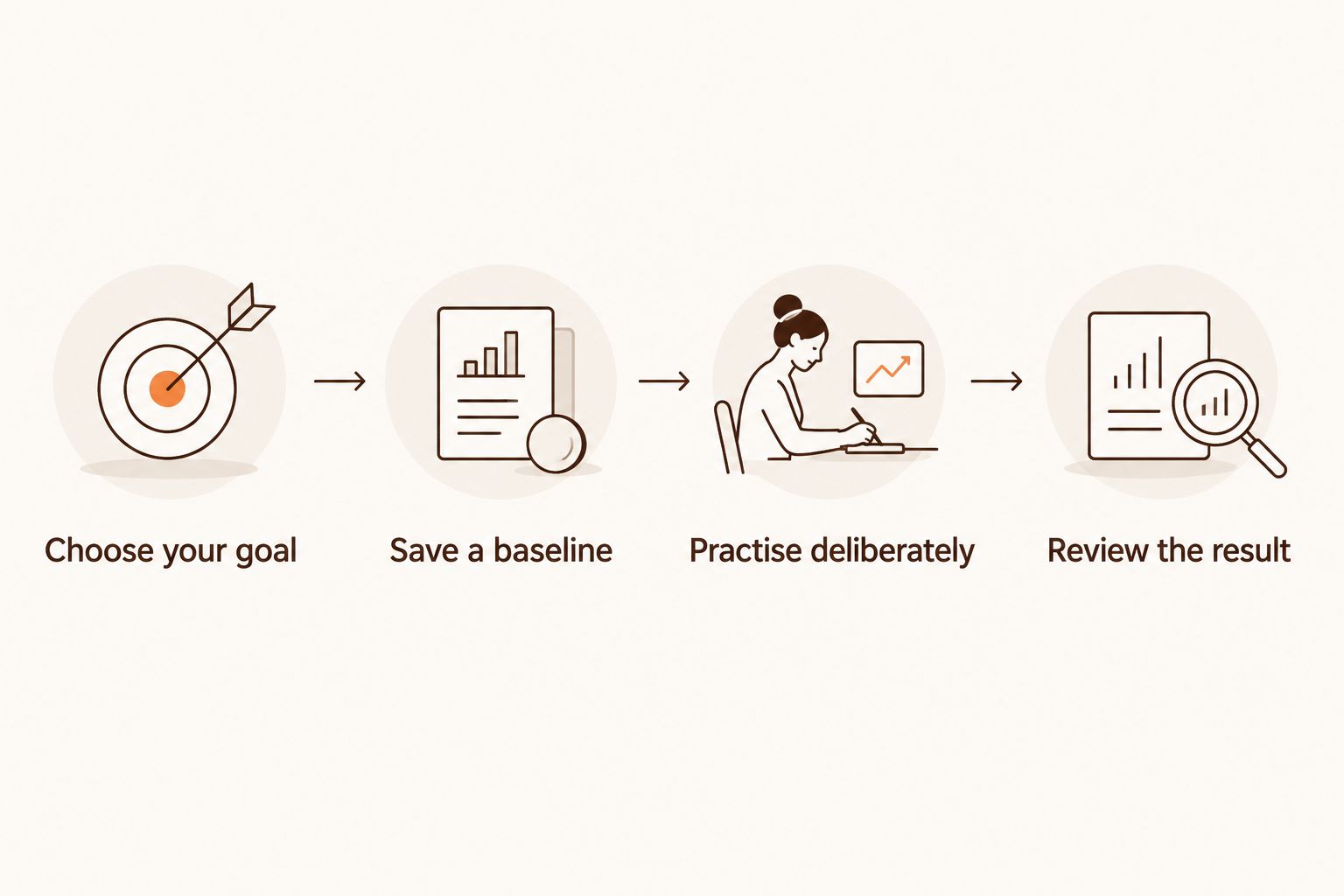
Buying several books at once makes it easy to collect advice without applying it. Start with the title that matches your goal, then use a small, repeatable routine.
Choose your goal
Write a plain-language goal before changing any letters. Examples include making names readable, keeping word spacing consistent or using writing as a reflection prompt. Avoid goals that require handwriting alone to change a relationship, career or emotional condition.
Save a baseline
Keep 1 baseline page of your normal handwriting. Use ordinary sentences, not carefully copied display writing, and note the pen and paper you used. The page is a reference, not a personality test.
Practise deliberately
As a starting routine, set aside 5 minutes per session for one exercise from your chosen book. This is a manageable practice suggestion, not a treatment dose. Work on a single feature so you can tell what you changed.
Review the result
Compare 2 writing samples containing the same passage: your baseline and a later attempt. Look for specific differences in readability, spacing and letter formation. Keep any reflection about mood or confidence in a separate note.
A neat practice page is only part of the picture. Try the adjustment in an ordinary note as well; that shows whether it remains useful when you are thinking about the message rather than concentrating on each letter.
What to check before choosing an edition
For a 2026 purchase, identify the book by both title and author. Similar handwriting titles can cover very different subjects, and a search result alone does not establish that you have found the intended book.
Check these details in a publisher or bookseller preview:
- Content: Does the sample show instruction, interpretation or both?
- Illustrations: Can you clearly see the handwriting examples in the format you intend to use?
- Language: Can you understand the explanations without repeatedly translating technical terms?
- Practice fit: Does the approach suit the handwriting you actually use?
A digital format is not automatically better or worse. What matters is whether the examples remain readable and whether you can comfortably refer to them while writing on paper.
Which graphotherapy book should you choose?
Choose Your Handwriting Can Change Your Life if graphotherapy itself is your subject. Choose Write Now if you want an italic handwriting method. Choose Improve Your Handwriting if you want practical help examining your existing writing.
If you are undecided, name the problem first. For hard-to-read notes, begin with handwriting instruction rather than a theory of personality change. For curiosity about graphotherapy, read the theory with clear limits and keep your conclusions provisional.
Soulera is best for readers seeking online handwriting and signature analysis for self-discovery, not a handwriting textbook. Choose the service or the book according to the task; they are not interchangeable.
FAQ
What's the best book to start learning graphotherapy?
Vimala Rodgers’s Your Handwriting Can Change Your Life is the closest fit among these books for exploring graphotherapy. Treat its personal-development framework as an approach to examine, not proof that changing handwriting changes personality.
Which book is best if I just want clearer handwriting?
Write Now by Barbara Getty and Inga Dubay is the best fit here if you want to learn an italic handwriting approach. Improve Your Handwriting by Rosemary Sassoon and G. S. E. Briem is another practical choice for examining your existing writing habits.
Are graphotherapy books the same as handwriting improvement books?
No, graphotherapy books connect handwriting changes with proposed personal changes, while handwriting improvement books focus on writing skills. Check the book’s purpose before assuming it addresses your goal.
Can changing my handwriting change my personality?
Changing handwriting is not an established method for reliably changing personality. You can improve a writing skill or use an exercise for reflection without treating either result as proof of personality change.
Can I practise handwriting changes without an analysis report?
Yes, you can practise letter formation and readability without a handwriting analysis report. Follow a suitable instructional book and compare ordinary writing samples rather than trying to diagnose yourself.
Do graphotherapy books replace therapy for anxiety or depression?
No, graphotherapy books do not replace evidence-based mental health care. Use them for reading or reflection, not diagnosis or treatment, and seek qualified support for mental health concerns.
Should I keep practising if handwriting exercises hurt?
No, stop an exercise that causes pain rather than pushing through it. Persistent discomfort or a sudden unexplained change in handwriting needs appropriate medical advice, not a graphotherapy interpretation.
One last thing
Keep one sample written when you were focused on communicating, not improving your handwriting. It is an honest check on whether your practice transfers to daily life.
The useful change is one you can describe without a personality label. A name is easier to read. A word has clearer spacing. A note takes less effort to decipher. Start there, and let reflection remain reflection.