

Best overall for evidence-focused study: Handwriting Identification: Facts and Fundamentals. Best for graphology basics: Handwriting Analysis: A Complete Basic Book. Best for an accessible introduction: The Complete Idiot’s Guide to Handwriting Analysis. This 2026 guide ranks handwriting analysis books for psychology students by learning purpose, while separating personality interpretation from forensic handwriting examination.
- Handwriting Identification: Facts and Fundamentals leads this shortlist of handwriting analysis books for psychology students seeking forensic context.
- Handwriting Analysis: A Complete Basic Book suits students learning graphology terminology, not validated personality assessment.
- The Complete Idiot’s Guide to Handwriting Analysis is the accessible starting point for unfamiliar handwriting terms.
- Soulera’s handwriting analysis reports belong in self-discovery, not psychological diagnosis.
Why this matters
Curious about what your handwriting says about you? Start by separating two questions: whether writing samples share an author, and whether handwriting reveals personality. They require different evidence. A book that teaches one does not establish the other.
Graphology interprets handwriting as an expression of personality. Forensic handwriting examination compares writing features to assess authorship. Neither should be confused with a clinical psychological assessment, and a forensic textbook does not validate graphology.
Soulera offers online handwriting, signature and graphology analysis reports for self-discovery. Soulera’s handwriting analysis reports belong in self-discovery, not psychological diagnosis. Keep that boundary clear when connecting personal reflection with your psychology coursework.
For your 2026 reading list, choose a book that matches the question you actually want to answer. Learning graphology’s vocabulary is a legitimate reading goal; treating its interpretations as established psychological findings is a different claim.
What makes the best handwriting analysis books for psychology students
The strongest choice is not the book promising the most revealing personality portrait. It is the book you can read critically and use for a clearly defined purpose.
- Scope clarity: You should know whether the book covers graphology, document examination or the history of handwriting interpretation.
- Observable features: Descriptions of spacing, letter formation and connections should remain separate from inferred personality traits.
- Evidence boundaries: A persuasive example is not proof that an interpretation works across people and situations.
- Learning accessibility: Choose explanations you can follow without confusing unfamiliar terminology with scientific authority.
- Academic usefulness: The book should help you formulate questions, compare explanations or understand a method—not replace validated assessment tools.
These criteria shape the 2026 ranking below. The forensic reference comes first because it helps establish the distinction between observing handwriting and making psychological claims. The graphology books then fill separate learning roles.
Handwriting analysis books at a glance
| Rank and book | Best for | Standout focus | Key limitation |
|---|---|---|---|
| 1. Handwriting Identification: Facts and Fundamentals | Evidence-focused comparison | Forensic handwriting identification | Technical; not a personality-analysis guide |
| 2. Handwriting Analysis: A Complete Basic Book | Structured graphology basics | Handwriting features and their graphological interpretations | Interpretations are not validated psychological measures |
| 3. Handwriting Analysis: Putting It to Work | Applied graphology reading | Connecting handwriting interpretation with practical situations | Practical examples do not establish predictive validity |
| 4. The Complete Idiot’s Guide to Handwriting Analysis | Accessible terminology | An introductory route into graphology | Accessibility does not resolve the evidence problem |
| 5. The Psychology of Handwriting | Historical perspectives | An earlier account of handwriting and psychology | Historical arguments need contemporary scrutiny |
1. Handwriting Identification: best for evidence-focused comparison
Handwriting Identification: Facts and Fundamentals, by Roy A. Huber and A. M. Headrick, concerns forensic handwriting identification. It is the best overall choice here for students who want to understand handwriting as something examined and compared, rather than immediately interpreted as personality.
The book’s purpose matters more than its position in the list. It addresses handwriting identification, not emotional wellbeing, career fit or relationship compatibility. Read it to understand the forensic question before comparing that question with graphology’s broader claims.
Handwriting Identification pros
- Gives you a forensic reference point outside personality graphology.
- Centres the comparison of handwriting features and writing variation.
- Helps distinguish an authorship question from a psychological interpretation.
Handwriting Identification cons
- Its technical focus demands more effort than an introductory graphology guide.
- It does not teach personality profiling or provide a clinical assessment method.
Best for: Psychology students examining the boundary between handwriting evidence and psychological inference.
For a seminar discussion, use this book to ask what a particular observation can establish. A recurring letter form is a writing feature; describing its writer as emotionally guarded introduces a separate hypothesis. That second step needs its own support.
Verdict: Buy for forensic context; skip it if your only goal is learning graphology terminology.
2. Handwriting Analysis: A Complete Basic Book: best for structured basics
Handwriting Analysis: A Complete Basic Book, by Karen Kristin Amend and Mary S. Ruiz, introduces handwriting features and the personality interpretations associated with them in graphology. It suits students who want an organised entry into the subject’s vocabulary.
Use the book to learn how graphology frames its observations. Then keep a separate record of which statements describe visible writing and which statements infer something about the writer. That distinction makes the reading more useful for psychology study.
A Complete Basic Book pros
- Introduces the feature-based vocabulary used in graphology.
- Offers a focused starting point instead of scattered online interpretations.
- Gives you material for comparing observation with personality inference.
A Complete Basic Book cons
- Graphological interpretations are not equivalent to validated personality measures.
- Reading the explanations does not establish that the proposed associations are reliable.
Best for: Students who want structured graphology basics before evaluating the field’s claims.
Keep the book in the right category on your 2026 reading list: an introduction to graphology, not a psychological testing manual. If you use an interpretation in an essay, identify it as the authors’ account rather than presenting it as an accepted finding.
Verdict: Buy for terminology; skip it as a substitute for personality-assessment training.
3. Handwriting Analysis: Putting It to Work: best for applied reading
Handwriting Analysis: Putting It to Work, by Andrea McNichol with Jeffrey Nelson, takes a practical approach to handwriting interpretation. Choose it when your interest is how graphology moves from visible features to claims about people and everyday situations.
That applied emphasis gives you useful material for critical reading. Follow the reasoning from the handwriting feature to the conclusion, then ask whether the example demonstrates the claim or merely illustrates it. Those are not the same thing.
Putting It to Work pros
- Presents graphology through a practical rather than purely historical lens.
- Helps you examine how handwriting interpretations become personal judgments.
- Provides a contrasting reading experience to a forensic reference.
Putting It to Work cons
- Applied examples do not independently establish accuracy.
- Practical judgments about people need evidence beyond a handwriting interpretation.
Best for: Students analysing the reasoning behind applied graphology claims.
Avoid turning the reading into an informal assessment of classmates. Instead, select an interpretation and write down what independent evidence would support or contradict it. This turns an engaging claim into a question you can evaluate without labelling another person.
Verdict: Buy for critical examination of applied graphology; skip it for hiring or clinical decisions.
4. The Complete Idiot’s Guide: best for accessible terminology
The Complete Idiot’s Guide to Handwriting Analysis, by Sheila Lowe, is an introductory graphology guide. It is the approachable choice for readers who want to understand the terminology before tackling denser material.
An accessible explanation can help you follow a subject without accepting every conclusion it presents. Read this book as an introduction to a system of interpretation, then check its personality claims against the evidence standards taught in psychology.
The Complete Idiot’s Guide pros
- Gives beginners an entry point into handwriting-analysis terminology.
- Makes it easier to recognise the kinds of features graphologists discuss.
- Suits preliminary reading before a more demanding comparison of methods.
The Complete Idiot’s Guide cons
- An introductory format is not a substitute for research-methods training.
- Clear explanations do not make personality interpretations scientifically established.
Best for: Students who need accessible vocabulary before deciding whether to study graphology further.
Start here if unfamiliar terms are blocking your understanding of the debate. Move to a forensic reference when you want to distinguish handwriting comparison from personality interpretation, rather than treating the two as interchangeable.
Verdict: Buy for orientation; skip it as your sole academic source.
5. The Psychology of Handwriting: best for historical perspectives
The Psychology of Handwriting, by Robert Saudek, belongs on this list as a historical perspective on the relationship between handwriting and psychological interpretation. Its value is understanding an earlier approach to the subject, not treating its age or title as proof.
For psychology students, historical reading can reveal how an argument is constructed and which assumptions it depends on. Read Saudek alongside contemporary research standards, especially when an observation becomes a claim about character or mental processes.
The Psychology of Handwriting pros
- Adds historical context to a reading list dominated by introductory guides.
- Gives you an earlier account to compare with later graphology writing.
- Supports discussion of how psychological explanations change over time.
The Psychology of Handwriting cons
- Historical terminology requires careful interpretation.
- Its arguments need scrutiny rather than automatic acceptance as current psychological knowledge.
Best for: Students writing about the history of handwriting interpretation and psychology.
For a 2026 essay, distinguish what Saudek argued from what contemporary evidence supports. That wording protects your analysis from a common mistake: treating a historically significant source as a current assessment standard.
Verdict: Buy for historical study; skip it as a present-day diagnostic guide.
How the books are ranked
This is a purpose-based reading shortlist, not a ranking of proven personality-analysis accuracy. Handwriting Identification leads on forensic context; A Complete Basic Book covers structured graphology basics; Putting It to Work fills the applied-reading slot. Sheila Lowe’s guide serves beginners, while Saudek supplies historical context.
A relevant research reference is Efrat Neter and Gershon Ben-Shakhar’s 1989 paper, The Predictive Validity of Graphological Inferences: A Meta-Analytic Approach, published in Personnel Psychology. Its scope is graphology’s predictive validity in personnel assessment—not a validation of handwriting-based psychological diagnosis.
Use primary research to evaluate validity; use these books to understand the approaches being evaluated.
Which handwriting analysis book should you choose?
Choose Handwriting Identification: Facts and Fundamentals if you are undecided and want the clearest separation from personality graphology. Its forensic focus gives you a different question to study: handwriting authorship rather than psychological character.
Choose A Complete Basic Book if your assignment specifically concerns graphology terminology. Choose Sheila Lowe’s guide if you need a gentler introduction, Putting It to Work if you want to critique applied interpretations, or Saudek if your topic is historical.
For your 2026 reading plan, start with 1 book matched to your assignment. Reading several books that repeat similar interpretations does not, by itself, provide independent evidence that those interpretations are correct.
A reading exercise that keeps observation separate from inference
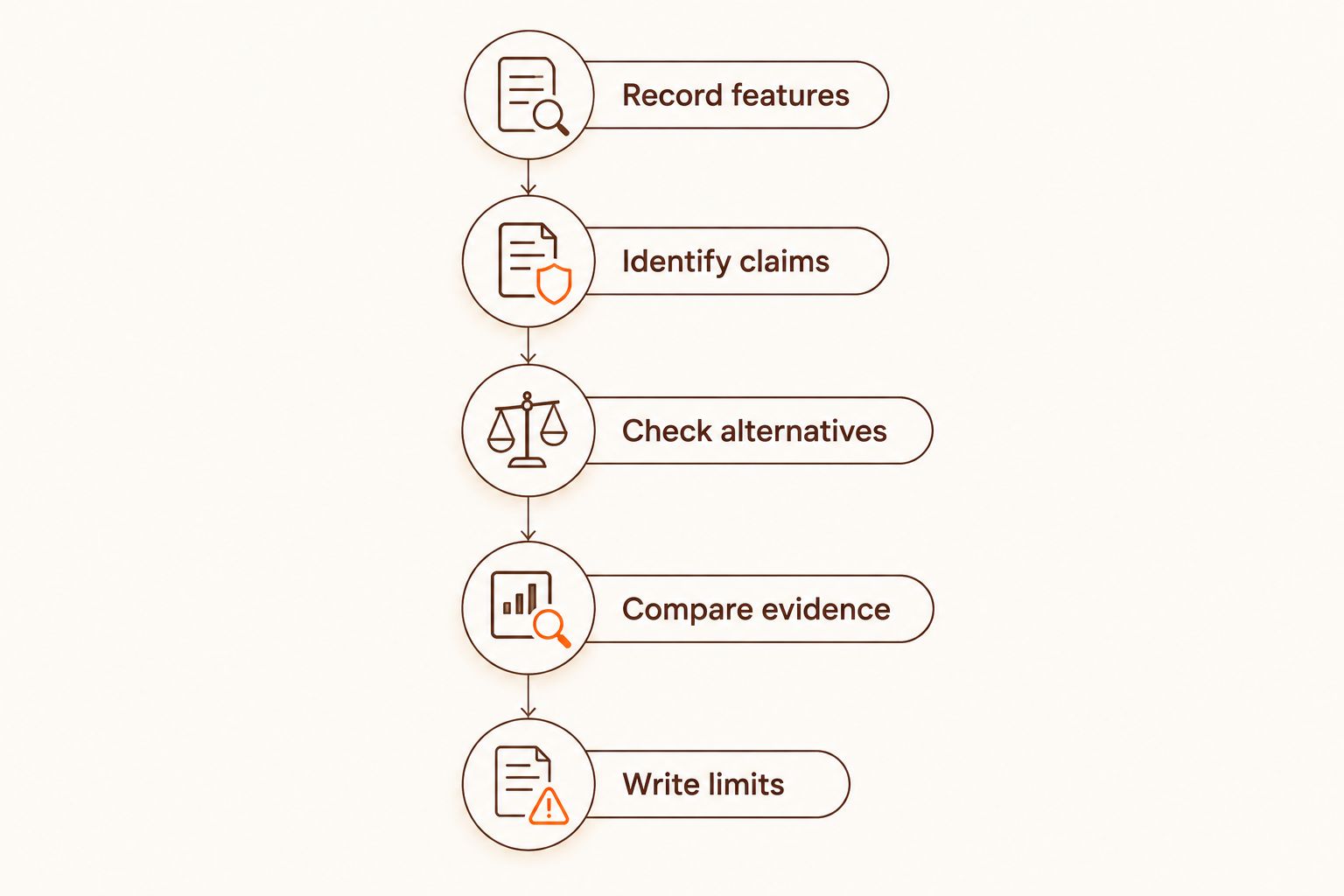
Use the same sequence with any graphology book. Your goal is not to produce a personality verdict; it is to make the reasoning visible.
- Record features. Describe what you can see: spacing, letter connections, size differences or line direction. Leave personality adjectives out.
- Identify claims. Select 3 claims from the reading and distinguish the observed feature from the proposed psychological meaning.
- Check alternatives. Ask what else needs consideration, including writing conditions, learned style and the task itself.
- Compare evidence. Find out what research would be needed to establish the claim, rather than relying on a convincing example.
- Write limits. State what your observations do not establish about the writer.
If you compare 2 writing samples, use them to practise describing similarities and differences—not to declare a personality change. A changed sample does not, on its own, demonstrate changed confidence, emotional health or character.
Soulera offers handwriting analysis for personal reflection. Keep that self-discovery purpose separate from the evidence requirements of a psychology assignment, a recruitment decision or a mental-health assessment.
FAQ
What’s the best handwriting analysis book for psychology students?
Handwriting Identification: Facts and Fundamentals is the best starting point on this shortlist for evidence-focused students interested in forensic comparison. For graphology terminology specifically, choose Handwriting Analysis: A Complete Basic Book.
Is graphology the same as forensic handwriting examination?
No. Graphology interprets handwriting in relation to personality, while forensic handwriting examination compares writing to assess authorship. Evidence for one purpose does not validate the other.
Which handwriting analysis book is easiest for a beginner?
The Complete Idiot’s Guide to Handwriting Analysis by Sheila Lowe is the accessible introductory choice on this list. Use it to learn terminology, not as a validated psychological assessment manual.
Can handwriting analysis diagnose a mental-health condition?
Handwriting graphology is not a clinical diagnostic method. Seek an assessment from an appropriately qualified mental-health professional rather than drawing a diagnosis from writing features.
Can I cite a graphology book in a psychology assignment?
Yes, when the book is relevant to your assignment and you identify its claims accurately. Cite research separately when discussing validity, and distinguish an author’s interpretation from an established finding.
Should I start with a handwriting book or a signature book?
Start with a handwriting book if your goal is understanding broader handwriting-analysis terminology. A signature-focused resource serves a narrower reading goal and does not establish psychological accuracy.
Are Soulera’s reports a replacement for psychological testing?
No. Soulera offers handwriting, signature and graphology reports for self-discovery. Treat the interpretations as reflection prompts rather than replacements for validated psychological assessment.
One last thing
A detailed interpretation is not automatically a well-supported interpretation. Before accepting a description of your personality, ask what observation supports it, how specific it is and what evidence would show it is wrong.
For your 2026 study notes, put observations and interpretations in separate columns. That simple habit makes handwriting books more useful: you can learn what the author says without silently turning every statement into a psychological fact.